4-Week At-Home Workout Plan: Minimal Equipment + Daily Stretch
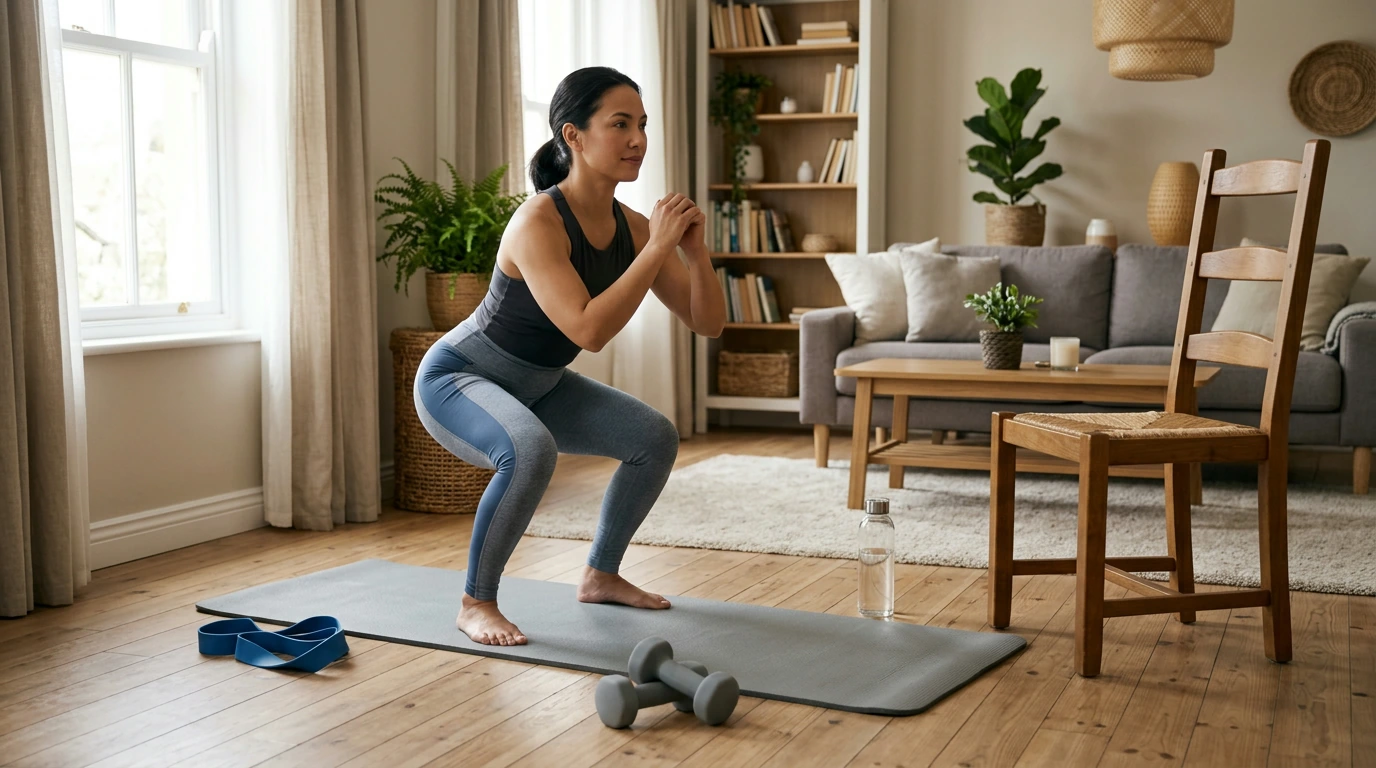
Fit at Home: A 4-Week Minimal-Equipment Workout Plan with Daily Workouts and Stretches
A structured four-week routine can remove the guesswork from home training, especially when time, space, and equipment are limited. This guide breaks down how a minimal-equipment plan typically works, what to expect each week, and how to stay consistent with daily workouts and stretching so progress feels measurable and sustainable.
What a 4-week home plan can help improve
A well-designed at-home plan usually focuses on a few big outcomes that matter for real-life fitness. Because the workouts repeat key movement patterns, it’s easier to build momentum and notice improvements week to week.
- Strength and muscle endurance using bodyweight patterns (squat, hinge, push, pull, carry/core).
- Cardiovascular fitness through low-impact intervals or steady-paced circuits that keep you moving without needing a treadmill.
- Mobility and flexibility with short, repeatable daily stretching routines that don’t feel like an “extra project.”
- Consistency from a day-by-day schedule—less improvising, more following through.
For general health benchmarks and weekly activity targets, the CDC’s overview is a helpful reference: CDC — Physical Activity Basics.
Who this style of program fits best
- Beginners who want clear daily direction without designing their own workouts.
- Busy schedules that benefit from predictable sessions and simple tracking (sets, reps, time, and effort).
- Minimal home setups (or no equipment) and limited floor space.
- Anyone returning after a break who prefers gradual progression over max-effort training.
Minimal equipment checklist (and easy substitutions)
You can get a lot done with very little. The goal isn’t fancy gear—it’s repeatable training you can actually stick with.
- Optional basics: yoga mat, light-to-medium resistance band, and a pair of dumbbells or a kettlebell.
- Simple substitutions: a backpack with books for loaded squats/hinges; a towel for isometrics; a sturdy chair for step-ups and incline push-ups.
- Space needs: about the size of a yoga mat plus arm’s length so you can move safely.
- Comfort and safety: supportive shoes for impact work; barefoot can work for controlled strength sessions if balance and ankle mobility are solid.
Quick substitutions for common home moves
| If you don’t have… | Use… | Works well for… |
|---|---|---|
| Dumbbells | Backpack or water jugs | Rows, hinges, loaded squats |
| Pull-up bar | Band rows or towel rows under a sturdy table (with caution) | Back and posture work |
| Bench | Sturdy chair or couch edge | Step-ups, incline push-ups, triceps work |
| Foam roller | Tennis ball or lacrosse ball | Targeted soft-tissue release |
How the 4-week structure typically progresses
Four weeks is long enough to build a habit and see clear improvements, without feeling endless. Most minimal-equipment programs follow a simple progression model:
- Week 1: learn movements, set a baseline, and prioritize form over speed.
- Week 2: add volume (more sets, reps, or slightly longer circuits) while keeping technique clean.
- Week 3: increase intensity (shorter rest, tougher variations, or modest added load).
- Week 4: consolidate gains with a balanced mix of strength, conditioning, and recovery-focused mobility.
If you like checking your plan against established guidance, ACSM’s resources are a solid place to start: American College of Sports Medicine (ACSM) — Exercise Guidelines.
A sample week layout (daily workouts + stretches)
Many at-home plans alternate strength-focused days with conditioning or mobility days to manage fatigue. Daily stretching tends to work best when it’s short, specific, and consistent—rather than occasional long sessions that are hard to repeat.
Example 7-day schedule (adjustable to fitness level)
| Day | Focus | Typical session (30–45 min) | Stretch emphasis (5–10 min) |
|---|---|---|---|
| Day 1 | Full-body strength | Squat + push + core circuit (moderate pace) | Hips and chest |
| Day 2 | Low-impact conditioning | Intervals (marching/jog, step-ups, shadow boxing) + core | Calves and hamstrings |
| Day 3 | Lower body + glutes | Hinge pattern + lunges + posterior chain work | Hip flexors and glutes |
| Day 4 | Mobility + recovery | Easy flow, balance, breathing, light core | Thoracic spine and shoulders |
| Day 5 | Upper body + posture | Push variations + rows/bands + anti-rotation core | Upper back and triceps |
| Day 6 | Mixed conditioning | Circuit (short bursts + controlled strength finisher) | Quads and back |
| Day 7 | Rest or active recovery | Walk, gentle mobility, optional stretch reset | Full-body |
What to look for in daily workout instructions
Clear instructions are the difference between “random exercises” and a plan you can follow for a full month.
Stretches that pair well with at-home strength and circuits
Safety notes and smart adjustments
For a broader overview of why consistent movement matters, the NIH provides a straightforward summary: NIH — Benefits of Physical Activity.
Using a PDF workout plan effectively
Fit at Home: 4-Week Workout Plan (digital PDF) at a glance
Get the plan
- Fit at Home: 4-Week Workout Plan | Minimal Equipment Exercise Guide PDF | Home Fitness eBook with Daily Workouts & Stretches
- Critical Thinking & Problem Solving eBook – Digital Download Guide for Smarter Decision Making, Brain Teasers & Life Skills Ebook
FAQ
Is a minimal-equipment home workout plan enough to build strength?
Yes. Progressive overload can come from more reps or sets, slower tempo, reduced rest, harder variations, and modest load (bands, dumbbells, or a backpack), as long as form stays solid.
How long should daily stretching take to make a difference?
Often 5–10 minutes per day is enough to improve mobility and recovery, especially when you repeat the same targeted stretches consistently rather than stretching randomly.
What if a workout day is missed—restart the week or continue?
Usually it’s best to continue with the next scheduled day and keep the overall sequence. Avoid doubling up hard sessions back-to-back unless recovery, sleep, and energy are all strong.












Leave a comment