Finally Focused Workbook: Beat Procrastination in 14 Days

Finally Focused: A Practical Anti-Procrastination Workbook for Follow-Through, Focus, and Better Time Use
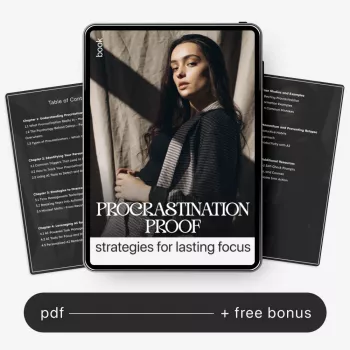
Procrastination usually isn’t laziness—it’s a pattern of avoidance, fuzzy priorities, and tasks that feel too big to start. Finally Focused: The Anti-Procrastination Workbook – Productivity Ebook & Focus-Building Guide with Time Management Tools is a guided digital workbook designed to help turn stalled plans into clear next actions, using structured exercises, focus-building routines, and time tools that fit real schedules.
Instead of hype, the workbook leans on practical mechanics: define what “done” means, identify what’s actually blocking you, reduce decision fatigue, and build a repeatable daily/weekly system. For background on why procrastination happens (and why it’s so common), see the American Psychological Association’s overview of procrastination and this actionable breakdown from Harvard Business Review.
Who This Workbook Helps Most
- People who know what to do but regularly delay starting (especially on open-ended projects).
- Students and professionals who lose focus mid-task or bounce between tabs and to-do lists.
- Anyone overwhelmed by competing priorities who needs a simple weekly and daily structure.
- Creative or self-directed workers who struggle without external deadlines.
- Readers who want a guided system (exercises + worksheets) rather than motivational quotes.
What’s Inside: Tools That Turn Intentions Into Actions
- A step-by-step framework to translate vague goals into specific next actions that are easy to begin.
- Time management tools that reduce decision fatigue: daily planning structure, priority filters, and scheduling blocks.
- Focus-building exercises that support sustained attention and help reduce task-switching.
- Anti-procrastination pages that pinpoint the real reason a task is being avoided (uncertainty, fear of failure, perfectionism, low energy, unclear outcome).
- Reflection pages that measure progress without shame spirals—then adjust the plan realistically.
Common procrastination triggers and workbook-friendly fixes
| Trigger | What it feels like | Useful tool to apply | Fast next step |
|---|---|---|---|
| Task is unclear | Staring at the task without moving | Define the next physical action + success definition | Write a 1-sentence outcome and the first 5-minute step |
| Task feels too big | Overwhelm, avoiding the whole project | Breakdown into micro-tasks + time-boxing | Create a 15-minute starter block |
| Perfectionism | Waiting for the “right time” or “right plan” | Minimum viable draft + iteration plan | Produce an intentionally rough first pass |
| Low energy | Scrolling, procrastinating, mental fog | Energy-based planning + short sprint | Do one low-effort admin step to build momentum |
| Fear of evaluation | Avoiding submitting, sharing, or finishing | Exposure ladder + pre-commitment | Draft, then schedule a send/submit time |
How to Use It: A 14-Day “Finally Focused” Sprint
The workbook works well as a two-week reset—long enough to build traction, short enough to feel doable. A simple approach is to run a 14-day sprint around one priority outcome (the thing that would make the next two weeks feel meaningfully better).
- Day 1–2: Pick one priority outcome and define what “done” looks like in concrete terms.
- Day 3–5: Identify avoidance triggers and rewrite tasks into tiny, startable actions; remove hidden steps that block progress.
- Day 6–9: Build a realistic weekly plan using time blocks, buffers, and a short daily review that prevents drift.
- Day 10–12: Strengthen focus with distraction rules, single-task windows, and quick reset routines when attention collapses.
- Day 13–14: Review what worked, adjust workload assumptions, and create a repeatable template for the next two weeks.
That last step matters: the goal isn’t a “perfect” two weeks—it’s a reusable structure for the next cycle, even when life gets messy.
Time Management Tools That Prevent the “Busy but Stuck” Loop
Many people aren’t short on effort—they’re short on clarity. Finally Focused targets the “busy but stuck” loop by making planning smaller, more concrete, and easier to follow through on.
- Priority filters that separate urgent noise from meaningful progress.
- Time-blocking guidance that includes buffers, transitions, and “shutdown” rituals to protect recovery time.
- A simple daily plan structure: 1 must-do outcome, 2 supporting tasks, 3 quick wins (so the day can still feel successful).
- Planning prompts that reduce overcommitting and help match tasks to available energy and attention.
- A derailed-day rescue method: reset, re-prioritize, restart with the smallest next action.
Instead of rebuilding your whole schedule, the workbook helps you build “guardrails”: fewer decisions in the moment, fewer spirals when a day slips, and more consistent re-entry.
Focus-Building Habits That Actually Stick
Focus is easier when your environment and expectations support it. The workbook emphasizes small, repeatable habits that lower friction and reduce task-switching.
When It’s Worth Pairing With Another Guide
- For building a better thinking process under pressure (decisions, tradeoffs, complex problems), pair it with Critical Thinking & Problem Solving eBook – Digital Download Guide for Smarter Decision Making.
- For entrepreneurs or creators stuck at “which idea should I pursue?”, pair it with Find Your Next Big Business Idea Toolkit – Trendspotting, Market Gaps, Validation, MVP Tests & Idea Scorecard (Ebook) to reduce procrastination fueled by ambiguity.
- For maximum follow-through, use one guide for choosing the right target and Finally Focused for executing consistently.
Product Snapshot
FAQ
Is this better for planning or for actually getting work done?
It’s built to do both: you clarify priorities and define “done,” then use next-action pages, time blocks, focus sprints, and review loops to follow through day by day.
How quickly can results show up?
Small improvements often show up within a few days—starting faster, less avoidance, and clearer next steps. Stronger consistency typically builds after 1–2 weeks of using the routines.
Does it work if procrastination is caused by anxiety or perfectionism?
It includes tools for emotional blockers, such as trigger identification, minimum-viable drafts, and gradual exposure-style steps paired with compassionate reviews to avoid shame cycles. It isn’t medical treatment, but it can support healthier follow-through patterns.











Leave a comment